

Few companies have done more to redefine the relationship between business, society and the environment than Patagonia. Founded in 1973 by climber and entrepreneur Yvon Chouinard, Patagonia has grown from a small outdoor equipment business into a globally recognised leader in sustainable and purpose-driven commerce. The company is renowned not only for producing high-quality outdoor clothing and gear but also for challenging conventional business thinking through its commitment to environmental protection, ethical supply chains, responsible consumption and long-term stewardship of natural resources.
Patagonia’s mission, “We’re in business to save our home planet,” reflects a philosophy that extends beyond profit generation to encompass the wellbeing of customers, employees, communities and ecosystems. Through initiatives such as sustainable materials sourcing, product repair and reuse programmes, environmental activism and significant financial commitments to conservation, Patagonia has demonstrated that commercial success and positive societal impact can coexist.
This case study examines Patagonia through the lens of the Symbiotic Business Assessment (SBA) framework. By exploring how the company creates value across multiple stakeholders while contributing to environmental regeneration and social wellbeing, the assessment considers whether Patagonia represents one of the world’s most compelling examples of a truly symbiotic business model.
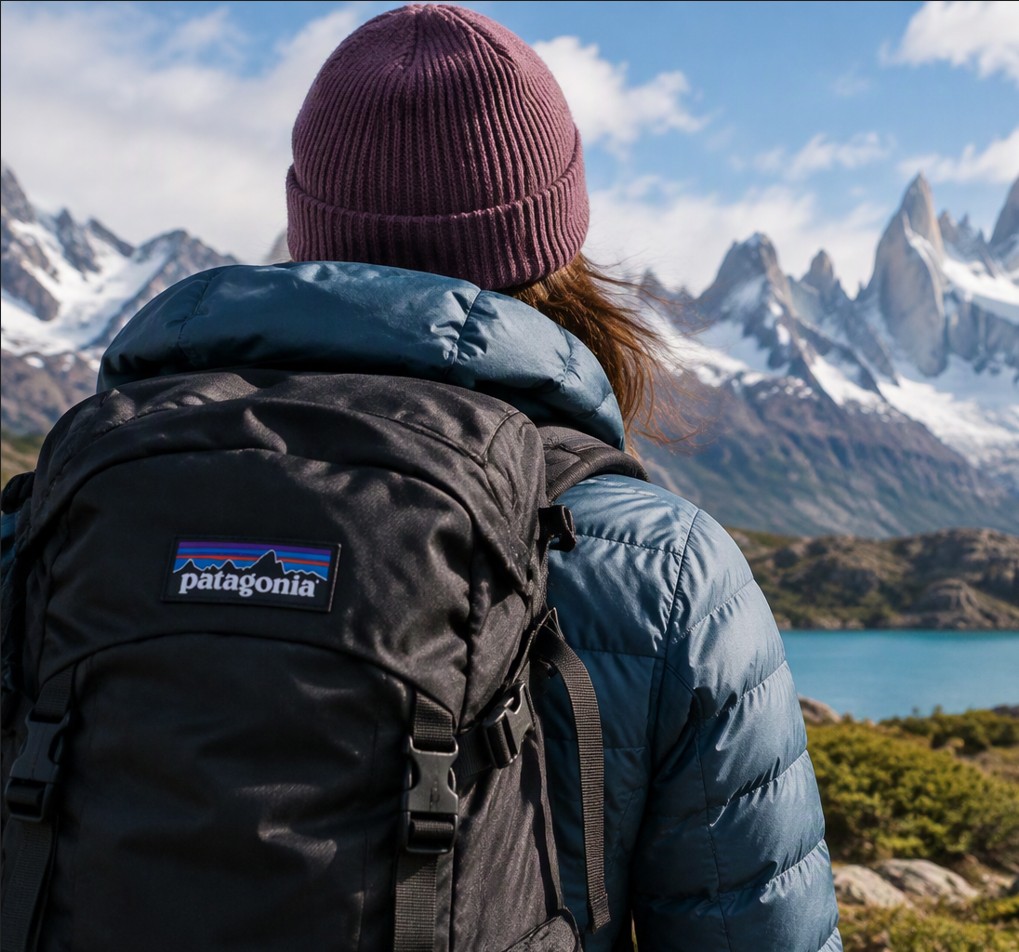
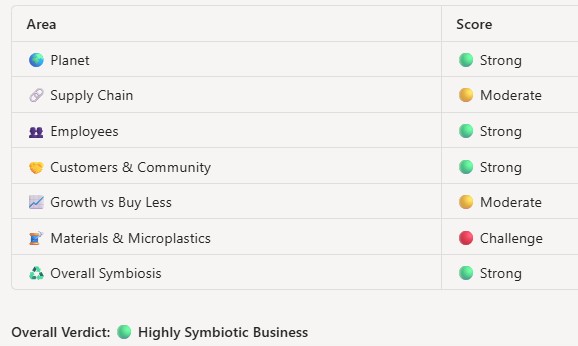
Patagonia achieves a strong overall Symbiotic Business Assessment, reflecting its long-standing commitment to environmental stewardship, employee wellbeing and stakeholder value creation. The company’s ownership structure, repair and resale programmes, and climate-focused mission demonstrate how business success can be aligned with positive outcomes for society and the planet.
The assessment highlights particular strengths in its support for employees and its trusted relationship with customers and communities. However, challenges remain. Like much of the outdoor apparel sector, Patagonia continues to rely on synthetic materials that contribute to microplastic pollution, and there is an inherent tension between commercial growth and its message of responsible consumption.
Overall, Patagonia provides one of the strongest real-world examples of a business creating reciprocal value for people, planet and prosperity, with its primary risks arising from the complexities of operating at global scale rather than from a lack of purpose or commitment.
