The aim of Ampeak Energy is to be a leader in the creation and operation of new, sustainable energy projects for the benefit of our planet.
Ampeak Energy has been at the forefront of developing new and exciting energy projects for many years and have a team of world leading experts in alternative and sustainable energy solutions.
Ampeak Energy owns the largest consented tidal stream project in the world, MeyGen. The company has developed the 398MW MeyGen site since its acquisition in 2010. The site is already delivering predictable, renewable power.
As the only predictable renewable energy source, and one with no visual impact, tidal stream energy can play a vital role in our journey to Net Zero.
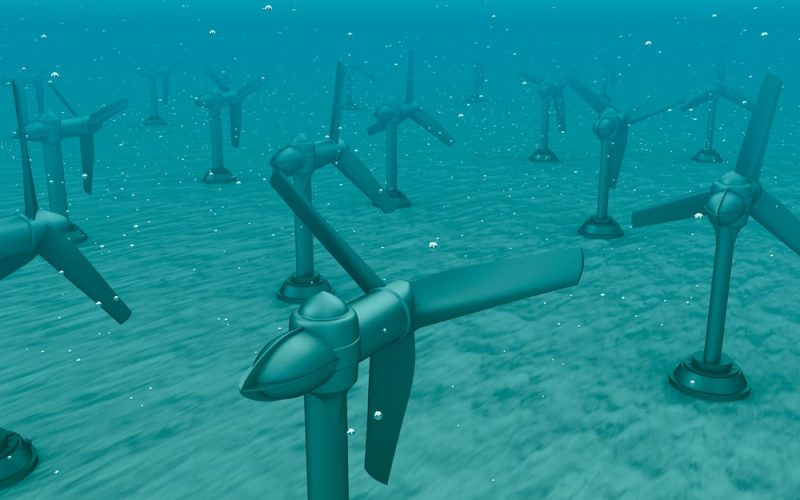
Since 2010, as part of the Pentland Firth and Orkney Waters leasing round, The Crown Estate awarded an agreement for lease to MeyGen plc, granting the option to develop a tidal stream project of up to 398MW at an offshore site between Scotland’s northernmost coast and the island of Stroma,.
The 3.5km site covers some of the fastest flowing waters in the UK, just 2km from Scotland’s north-east tip. To the north of the site is the uninhabited island of Stroma, which creates a natural channel with the mainland to accelerate the millions of tonnes of water flowing between the North Sea and the Atlantic Ocean every day. This site was originally identified by Ampeak Energy in 2007, following a global review of tidal resource which concluded that the high flows, medium water depths and proximity to the mainland rendered it a prime location for development.
It is the largest planned tidal stream project in the world. .
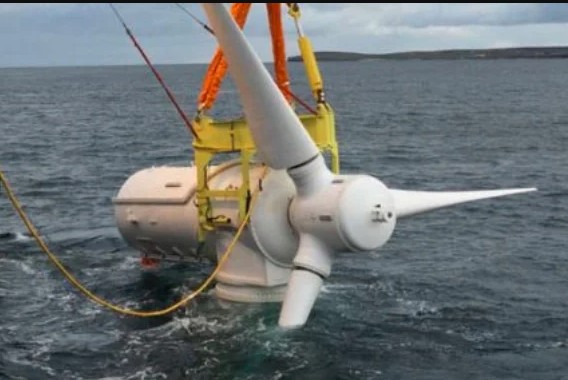
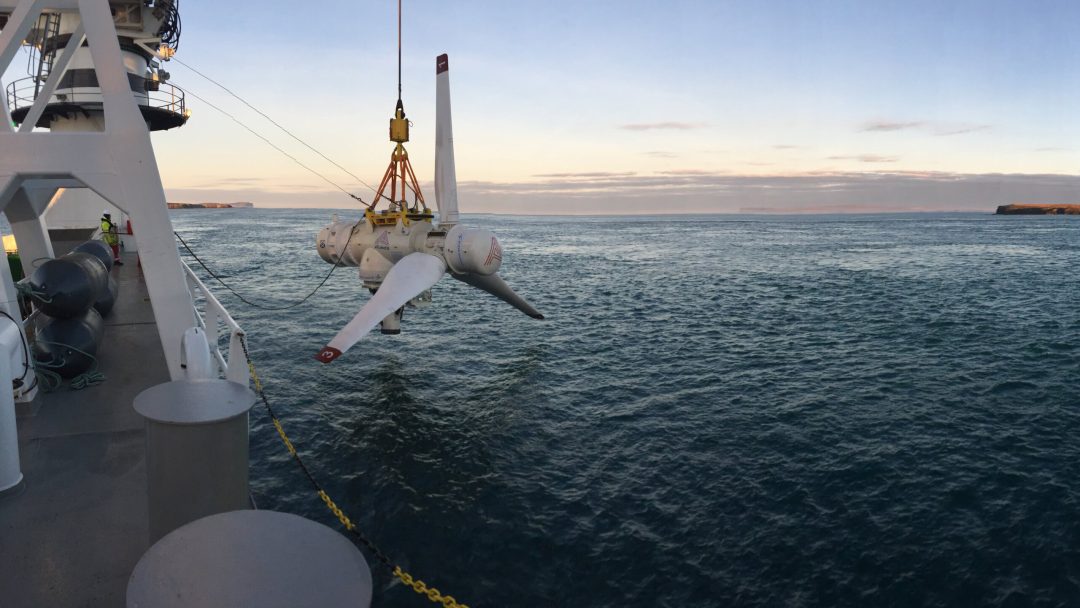
Each turbine has 3 blades with a rotor diameter of 18m. These blades pitch to maintain the machines installed capacity above a rated flow speed. The turbines also include a yaw module which rotates the turbine at each slack tide to face into subsequent ebb or flood tide.
The 150t turbines are mounted on a 1450t gravity foundation that supports the turbines under its own weight in average flow speeds of up to 10 knots. Each turbine has a dedicated quad armoured subsea array cable laid directly on the exposed seabed and brought ashore via a horizontal directionally drilled borehole within the foreshore bedrock.
The turbines feed into the onshore power conversion unit building at the Ness of Quoys, where the 4kV supply passes through an ABB PCS6000 converter to be made grid code compliant at 33kV for export into the local distribution network. Based on average UK annual consumption of 3.1MWh per annum this phase of the tidal array generates sufficient electricity to supply circa 6,000 homes.
The supply chain for the Phase 1 project is spread across the United Kingdom, Europe and North America.