
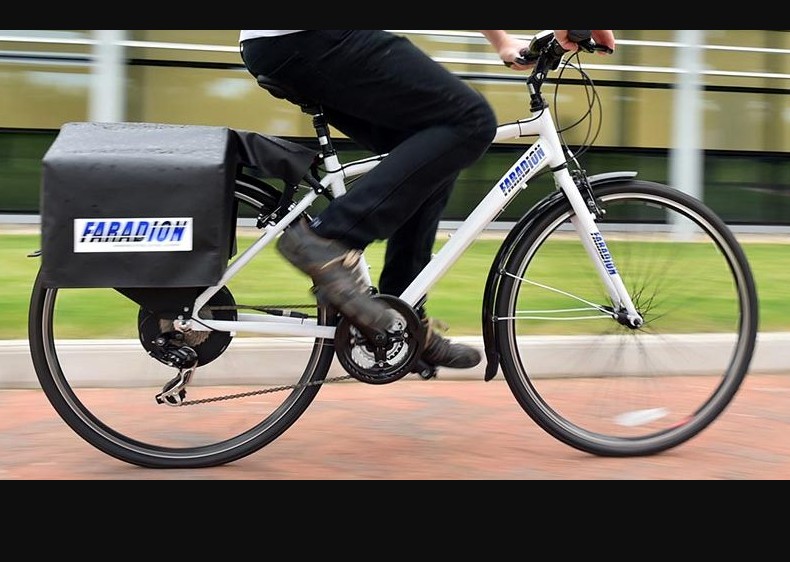
Faradion was started in 2011, by Dr Jerry Barker, Dr Chris Wright and Ashwin Kumaraswamy, to develop and bring to market sodium-ion technology. It has developed a strategic, wide-reaching and extensive IP portfolio, comprising 21 patent families covering Na-ion technology.
Faradion was founded on the premise that sodium-ion batteries are cheaper and safer than lithium-ion, with a higher energy density and a wider operating temperature range than other batteries. With this combination of cost, safety and performance Faradion’s sodium-ion batteries are now being manufactured by our licensees and partners to demonstrate the benefits of the technology in real-world applications.
Sodium-ion batteries are recognised as an emergent technology and a key part of the solution for cheaper, cleaner energy provision.
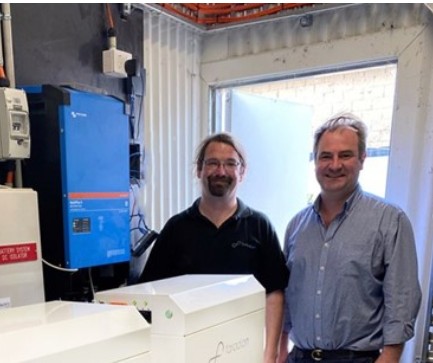
Although Faradion’s sodium-ion batteries work in a similar way to other rechargeable batteries, they have some unique advantages. These include an extended operational voltage window, which offers safety benefits, and a wide temperature range.
The dangers of transporting Li-ion batteries are well documented, and they should not be discharged below 30% SOC for transportation/storage, so cargo cells must be air-freight transported at considerable cost. However, a sodium-ion cell can be fully discharged to zero volts, akin to a capacitor. In this state, the potential for thermal runaway due to short-circuiting is eliminated. Faradion has published a detailed peer-reviewed journal article on this subject, showing the reason why sodium-ion cells can be safely discharged to 0 V (and also to negative voltages), whilst lithium-ion cells cannot.
Faradion are working with the Department for Transport and UN Sub-Committee of Experts on the Transport of Dangerous Goods to develop the framework for the testing and transportation requirements for sodium-ion batteries.
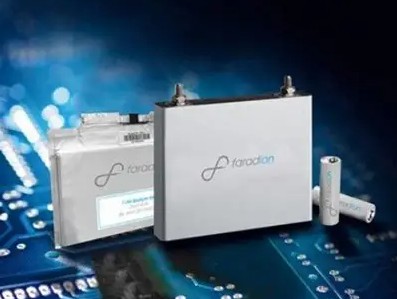
Faradion’s sodium-ion batteries do not use lithium, cobalt or copper and therefore are not susceptible to changes in the prices of these materials, unlike lithium-ion batteries.
Faradion’s sodium-ion technology is anticipated to cost 30% less than Li-ion.
This cost reduction is achieved by a combination of:
- Using highly-abundant sodium as the ion in the battery
- The absence of expensive cobalt in the active materials
- Readily available anode materials
- Inexpensive electrolytes
- The use of aluminium current collectors for both electrodes
The potential savings have been highlighted by Sir Mark Walport, Chief Scientific Adviser to HM Government and Head of the Government Office for Science.
