
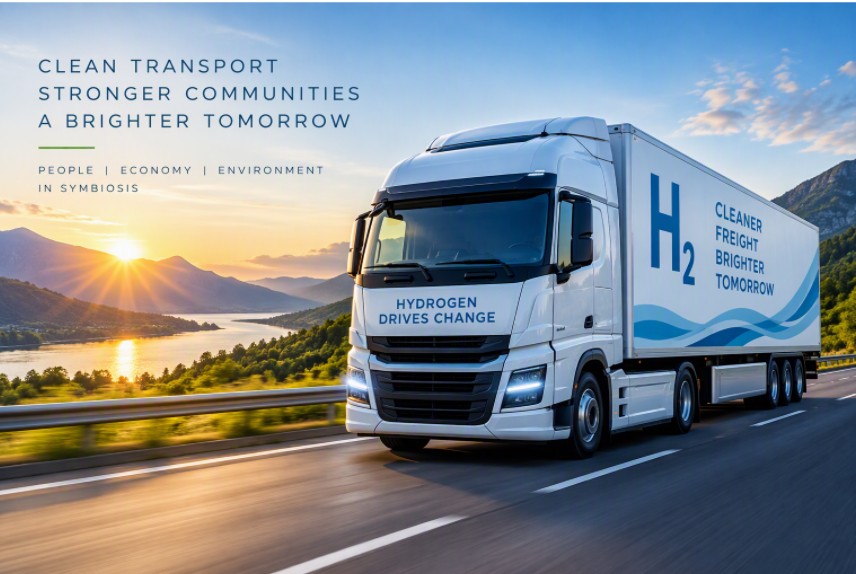
What does a truly symbiotic business look like in practice?
As the world seeks solutions to reduce emissions, improve efficiency, and create long-term economic value, some businesses are demonstrating that commercial success and environmental responsibility can go hand in hand.
Hydrogen Vehicle Systems (HVS) is one such example.
By developing hydrogen-powered freight transport solutions, HVS aims to address one of the most challenging areas of decarbonisation: heavy goods transportation. Rather than simply replacing one vehicle with another, the company is working towards a transport system that can reduce environmental impact while supporting economic productivity and industry innovation.
Using the Symbiotic Business Assessment™, HVS scores strongly because its activities seek to create value across three interconnected dimensions:
✅ Economic Prosperity
✅ Environmental Sustainability
✅ Social Wellbeing
This is the essence of a symbiotic business: an organisation that generates benefits for people, the economy, and the natural world simultaneously, rather than pursuing profit in isolation.
In this Symbiotic Business Spotlight, we explore how Hydrogen Vehicle Systems contributes to a more balanced and regenerative future for freight transport.
Symbiotic Business Assessment™ Score: 88% (Grade A) 🟢
Creating shared value through cleaner transport, technological innovation, and long-term sustainability.
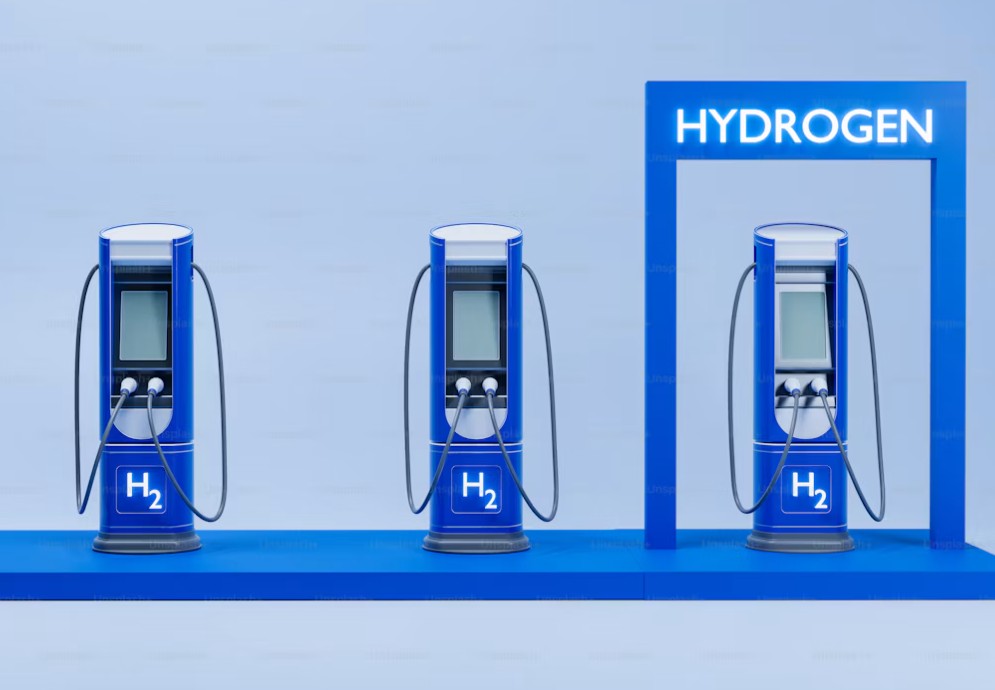
Hydrogen Vehicle Systems (HVS) is an innovative UK-based transport technology company focused on developing hydrogen-electric heavy goods vehicles and associated technologies for the freight sector. The company’s vision centres on reducing the environmental impact of one of the most carbon-intensive areas of the economy while maintaining the economic efficiency upon which modern logistics depends.
From a Symbiotic Business perspective, HVS demonstrates how technological innovation can create shared value across environmental, economic, and social systems. By seeking to replace diesel-powered freight vehicles with hydrogen-powered alternatives, the company addresses climate challenges while supporting the continued movement of goods essential to society.
Rather than viewing sustainability as a compliance obligation, HVS places environmental improvement at the heart of its business model. This alignment between commercial success and positive societal outcomes is a key characteristic of a symbiotic enterprise.
Symbiotic Business Assessment™
| Dimension | Score | Assessment |
|---|---|---|
| Environmental Value | 5/5 | Strong commitment to reducing transport emissions through hydrogen-powered solutions. |
| Economic Value | 4/5 | Potential to improve long-term transport efficiency and support emerging clean-energy markets. |
| Social Value | 4/5 | Supports cleaner air, innovation, skilled employment, and safer, more comfortable driver environments. |
| Stakeholder Integration | 4/5 | Collaborates with industry partners, investors, technology providers, and logistics operators. |
| Future Contribution | 5/5 | Directly contributes to the development of a lower-carbon transport system. |
Overall Symbiotic Score
🟢 22/25 (88%)
Grade A: Strong Symbiotic Business
Why HVS Qualifies as a Symbiotic Business
Hydrogen Vehicle Systems seeks to create benefits across multiple interconnected systems:
Environmental Benefits
- Reduced greenhouse gas emissions from freight transport.
- Reduced dependence on fossil fuels.
- Support for national net-zero objectives.
- Potential contribution to cleaner urban air quality.
Economic Benefits
- Encourages investment in clean transportation technologies.
- Supports development of the hydrogen economy.
- Creates opportunities throughout supply chains and infrastructure networks.
- Helps logistics businesses prepare for future environmental regulations.
Social Benefits
- Supports skilled engineering and manufacturing employment.
- Encourages innovation and technological leadership.
- Potential improvement in public health through reduced pollution.
- Focus on enhanced driver experience and wellbeing.
Opportunities for Further Improvement
While HVS performs strongly within the Symbiotic Business Assessment™, there are several areas where its symbiotic contribution could potentially be strengthened further.
1. Circular Economy Integration
Current emphasis is on cleaner vehicle operation. Future opportunities may include:
- Vehicle remanufacturing programmes.
- Design for component reuse.
- Battery and fuel-cell recovery schemes.
- Closed-loop materials management.
Potential Impact: Higher resource efficiency and reduced lifecycle environmental impact.
2. Biodiversity and Natural Capital
The business model focuses primarily on carbon reduction. Symbiotic leadership could be enhanced through:
- Nature-positive investment programmes.
- Biodiversity partnerships.
- Ecological restoration projects linked to operations.
- Natural capital reporting.
Potential Impact: Broader ecological contribution beyond emissions reduction.
3. Community Value Creation
Opportunities include:
- Local skills academies.
- Apprenticeship programmes.
- Community energy partnerships.
- Education initiatives promoting sustainable transport careers.
Potential Impact: Greater societal resilience and community engagement.
4. Transparency and Impact Reporting
Future development could include:
- Symbiotic Impact Reports.
- Quantified social and environmental outcomes.
- Public sustainability dashboards.
- Annual symbiotic performance assessments.
Potential Impact: Increased stakeholder trust and accountability.
5. Renewable Hydrogen Commitment
Hydrogen’s sustainability depends significantly on how it is produced.
A leading symbiotic strategy would encourage:
- Green hydrogen from renewable energy.
- Renewable-powered refuelling infrastructure.
- Supply-chain carbon transparency.
Potential Impact: Maximises environmental benefits across the full value chain.
Symbiotic Business Verdict
Hydrogen Vehicle Systems represents an excellent example of a business seeking to align commercial objectives with environmental and social progress. Its technologies have the potential to support the transition towards cleaner freight transport while maintaining economic productivity and industrial competitiveness.
To become a truly exemplary Symbiotic Business, HVS could broaden its focus from transport decarbonisation alone to encompass circularity, biodiversity enhancement, community development, and comprehensive impact reporting.
Final Classification
SYM-HYD-001
Sector: Sustainable Mobility & Hydrogen Transport
Symbiotic Grade: A
Symbiotic Score: 88% 🟢
