
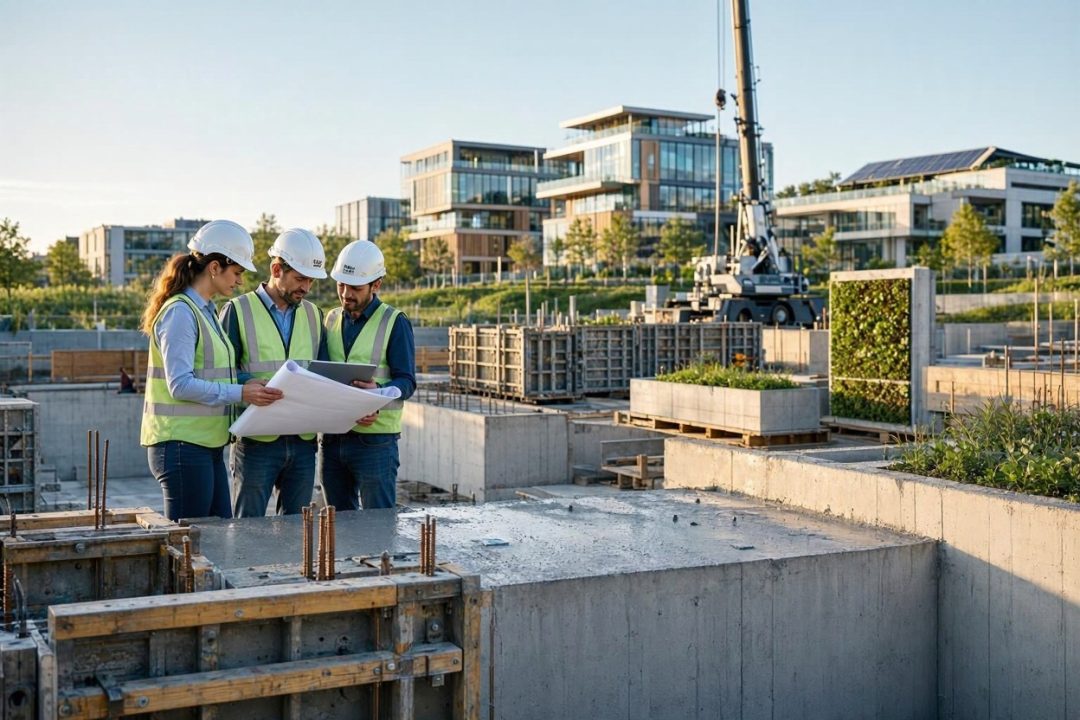
The construction industry is responsible for some of the world’s highest levels of carbon emissions, with cement production alone contributing significantly to the climate challenge. Yet the buildings, infrastructure and communities we depend upon cannot simply be abandoned. The real question is whether one of humanity’s most essential materials can be reimagined for a more sustainable future.
NuGreen offers a compelling answer. Through the development of clinker-free, low-carbon cement, the company is demonstrating how industrial innovation can dramatically reduce environmental impact while maintaining the performance demanded by modern construction. Rather than viewing economic success and ecological responsibility as competing objectives, NuGreen seeks to align them.
From a Symbiotic Business perspective, NuGreen is particularly noteworthy because its innovation creates value across multiple forms of capital. Its technology contributes to ecological resilience, advances scientific knowledge, supports long-term societal goals and provides a commercially viable pathway towards decarbonising one of the world’s most carbon-intensive industries.
This article explores how NuGreen’s approach reflects the principles of Symbiotic Business and what its example may tell us about the future of construction, enterprise and sustainable development.
Symbiotic Business Assessment of NuGreen
Turning a High-Impact Industry into a Force for Regeneration
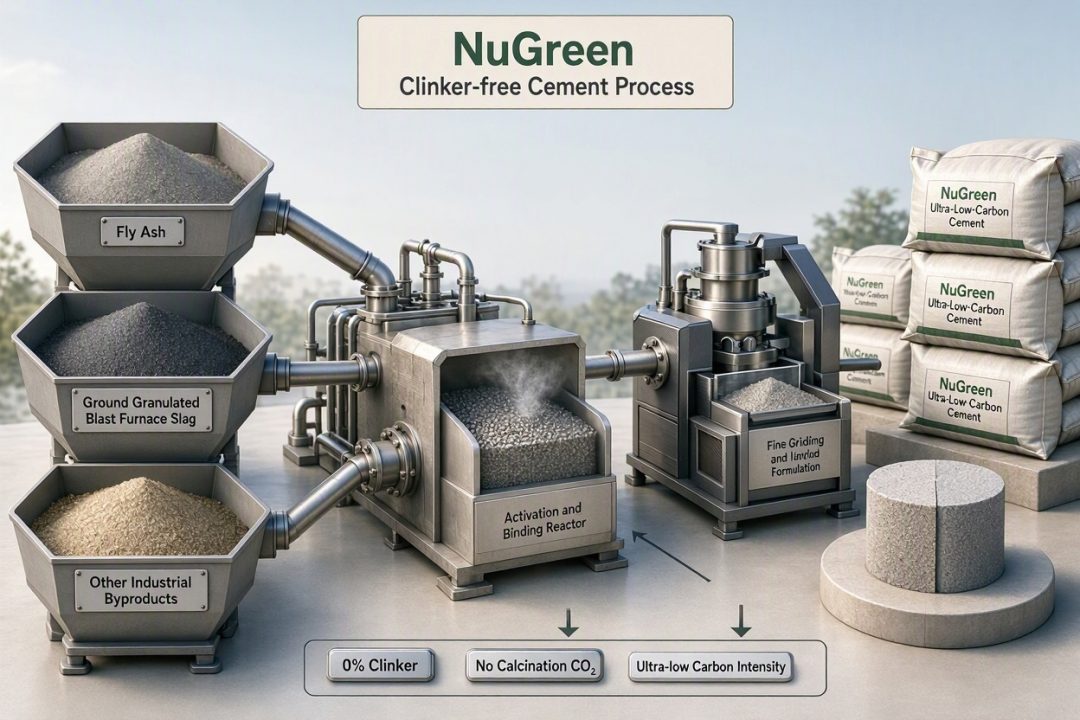
The cement industry is one of the world’s largest industrial sources of carbon emissions, making it a critical sector for innovation if global sustainability goals are to be achieved. NuGreen addresses this challenge through its development of clinker-free, ultra-low-carbon cement. By replacing traditional clinker with industrial by-products and eliminating the need for calcination, NuGreen demonstrates how industrial processes can be redesigned to create environmental and societal value alongside commercial success.
From a Symbiotic Business perspective, NuGreen provides an instructive example of how technological innovation can contribute to multiple forms of capital simultaneously.
Assessment Against the Six Capitals
Financial Capital: ★★★☆☆ (3/4)
NuGreen operates within a vast global construction market and addresses growing demand for low-carbon building materials. Its approach seeks to reduce environmental impact without requiring radical changes to construction practices, providing a potentially scalable and commercially attractive solution.
Social Capital: ★★☆☆☆ (2/4)
The company contributes indirectly to social wellbeing through climate mitigation and support for more sustainable infrastructure. However, there is limited publicly available evidence regarding employee wellbeing, community engagement programmes, stakeholder participation or wider social impact initiatives.
Relational Capital: ★★★☆☆ (3/4)
NuGreen’s model depends upon collaboration across construction, materials, engineering and sustainability ecosystems. The company shows evidence of building partnerships and industry relationships that support adoption of innovative low-carbon technologies.
Knowledge Capital: ★★★★☆ (4/4)
Knowledge creation lies at the heart of NuGreen’s business model. Its clinker-free cement technology reflects significant scientific research, materials innovation and practical application. The company demonstrates a strong commitment to advancing knowledge within a traditionally carbon-intensive industry.
Ecological Capital: ★★★★☆ (4/4)
This is NuGreen’s strongest area. By eliminating clinker and utilising industrial by-products, the company significantly reduces carbon emissions associated with cement production. Its approach also promotes more efficient resource use and supports the transition towards a lower-carbon built environment.
Legacy Capital: ★★★★☆ (4/4)
NuGreen’s mission aligns closely with the long-term interests of future generations. By addressing one of the most challenging sources of industrial emissions, the company contributes to the creation of infrastructure capable of supporting a more sustainable and climate-resilient future.
Summary Assessment
| Capital | Score |
|---|---|
| Financial | 3/4 |
| Social | 2/4 |
| Relational | 3/4 |
| Knowledge | 4/4 |
| Ecological | 4/4 |
| Legacy | 4/4 |
Overall Score: 20/24 (83%)
Traffic Light: 🟢 Green
Classification: Symbiotic Business Leader
Conclusion
NuGreen demonstrates that even highly industrial sectors can evolve towards more symbiotic forms of value creation. Its greatest strengths lie in ecological impact, technological innovation and long-term societal contribution. While further evidence of social and stakeholder impacts would strengthen its overall profile, NuGreen already provides a compelling example of how business innovation can align commercial success with environmental and intergenerational wellbeing.
For advocates of Symbiotic Business, NuGreen offers an encouraging illustration that the path to sustainability is not limited to small niche enterprises. It can also emerge within some of the world’s most challenging and carbon-intensive industries, where the potential benefits for society and the planet are greatest.
