
Transforming the Built Environment Into a Carbon Sink
Blue Planet’s technology represents one of the most advanced examples of symbiotic innovation — a system where industrial processes actively regenerate environmental value rather than extract it. Their core products turn the global built environment into a permanent carbon reservoir, aligning perfectly with the intrinsic sustainability principles at the heart of Intrinsic Spring.
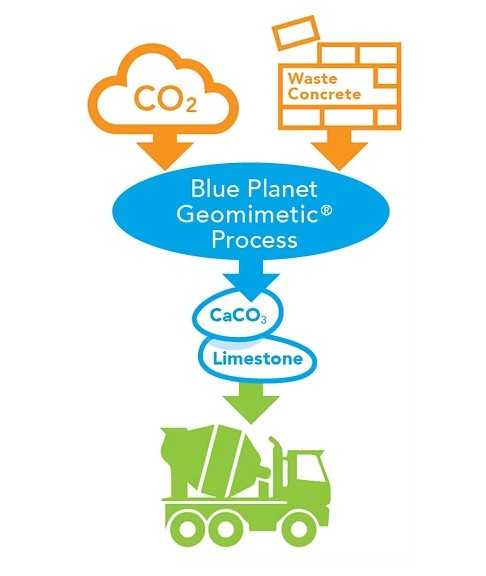
Blue Planet Systems delivers one of the world’s most advanced permanent carbon‑capture technologies, transforming aggregate, concrete, and building materials into long‑term carbon sinks. Their synthetic limestone and upcycled aggregates embody the principles of symbiotic business — closing industrial loops, regenerating environmental value, and turning the built environment into a stable, mineralised reservoir for CO₂.
The Products That Make It Possible
1. CaCO₃ Aggregate — Synthetic Limestone with Embedded CO₂
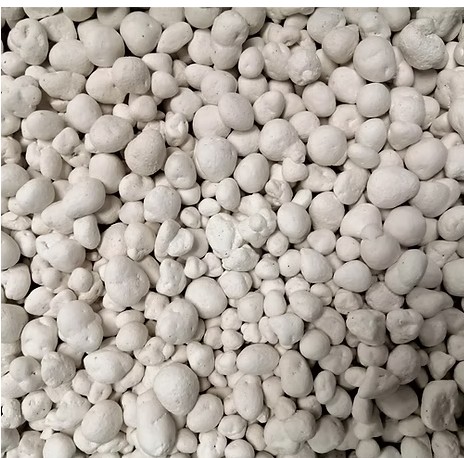
Blue Planet produces a manufactured limestone aggregate containing 44% CO₂ by mass, permanently mineralised and locked into the structure of the stone. Every tonne of this aggregate contains 440 kg of sequestered CO₂, preventing it from accumulating in the atmosphere. It performs comparably or better than conventional lightweight aggregates and can be produced in both coarse and fine grades.
2. Upcycled RCA Aggregate — Closing the Circular Loop
This aggregate is created from demolished or returned concrete, processed to extract calcium and alkalinity for Blue Planet’s mineralisation step. The result is a high‑quality, harder‑than‑standard recycled aggregate that avoids emissions from mining and transportation while adding recycled content value. It is a practical demonstration of the Urban Quarry concept — turning waste concrete into a feedstock and eliminating the need for destructive virgin aggregate extraction.
3. Carbon‑Negative Concrete
By replacing conventional aggregate with Blue Planet’s carbon‑sequestered materials, concrete becomes carbon negative — meaning the more you build, the more carbon you store. This is a paradigm shift: structural engineers no longer need to reduce cement content to lower emissions. Instead, the aggregate itself becomes the carbon sink. Highways, bridges, and high‑rise buildings become long‑term climate assets.
4. High‑Reflectance Roofing & Surface Materials
Blue Planet’s limestone exhibits very high solar reflectance, with roofing granules achieving values around 0.73, far above typical shingles. This reduces heat absorption, lowers cooling demand, and cuts associated power‑plant emissions — a direct symbiotic benefit between built surfaces and energy systems.
Symbiotic Benefits for the Intrinsic Spring Ecosystem
🌱 1. Regenerative Value Creation
Blue Planet’s products don’t merely reduce harm — they create new environmental value. They turn construction into a regenerative act, aligning with the Symbiotic Business principle that economic activity should strengthen ecological systems.
♻️ 2. Circularity at Industrial Scale
The Urban Quarry model demonstrates intrinsic circularity: waste → feedstock → high‑value product → long‑term carbon storage. This is the largest possible loop in the circular economy, and it fits seamlessly into Intrinsic Spring’s capability pathways.
🏗️ 3. Infrastructure as a Climate Asset
Buildings, roads, and cities become carbon stores, not carbon sources. This reframes infrastructure as part of the solution — a core message in intrinsic sustainable development.
🔬 4. Science‑Aligned, Permanently Stable Carbon Capture
Mineralised CO₂ is stable for geological timescales. This is intrinsic permanence — not offsetting, not temporary storage, but true long‑term sequestration.
🌐 5. Ideal Fit for Symbiotic Business Models
Blue Planet’s approach exemplifies symbiotic business:
environmental gain
economic viability
technological innovation
circular resource flows
community and planetary benefit
