
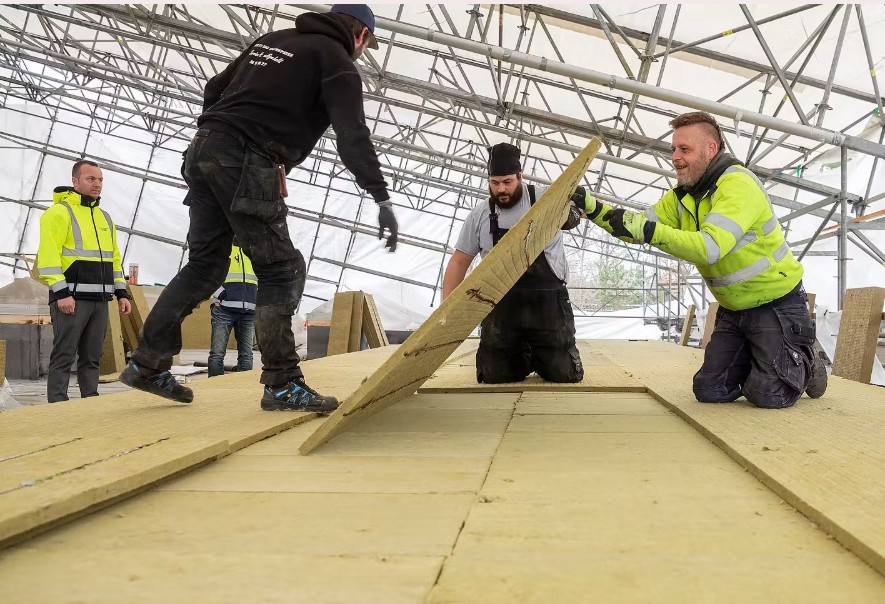
ROCKWOOL is one of the UK’s leading stone‑wool insulation providers, known for harnessing the natural power of stone to improve fire safety, acoustic comfort, and energy performance in buildings. For more than 80 years, the company has focused on creating durable, high‑performance materials that support safer, more efficient, and more comfortable places to live and work..
Symbiotic Business is built on the idea that organisations thrive when they optimise ecological, social, and economic value together — not as separate sustainability initiatives, but as an integrated operating logic. ROCKWOOL’s stone‑wool products provide multiple benefits:
Ecological value: Stone wool improves thermal performance, reduces energy waste, and supports long‑term carbon reduction in buildings.
Social value: Fire resilience, acoustic comfort, and healthier indoor environments uplift wellbeing across homes, schools, hospitals, and workplaces.
Economic value: Durable materials, lifecycle efficiency, and energy savings create long‑term financial resilience for building owners and communities.
ROCKWOOL does not yet operate as a fully symbiotic business because its sustainability strengths are still product‑driven rather than system‑driven but it demonstrates clear emerging symbiotic characteristics. The company’s commitment to safety, comfort, and energy efficiency aligns strongly with Intrinsic Spring’s mission to highlight practical, regenerative‑leaning innovations that improve everyday life.
🧱 7 Reasons Rockwool is a Sustainable & High‑Performance Insulation
1. Made from Abundant Natural Materials
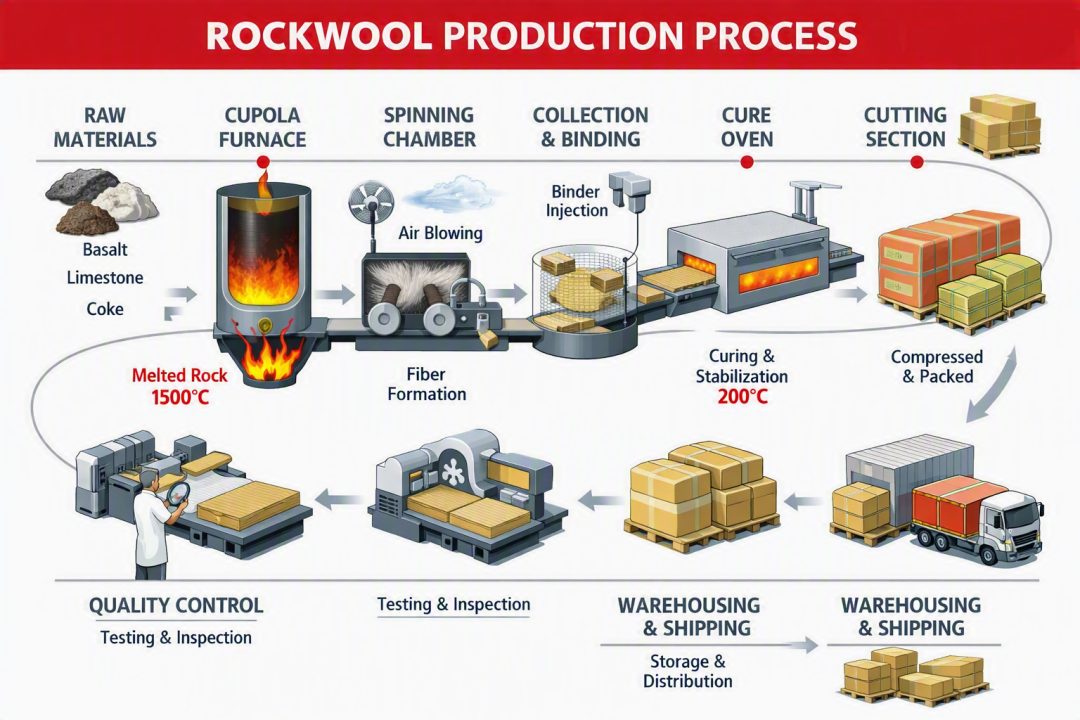
Rockwool is produced from volcanic rock and recycled steel slag, resources that are plentiful, non‑toxic, and naturally occurring. This gives it a far lower ecological footprint than petrochemical foams.
2. Exceptional Thermal Performance
Stone wool’s dense fibre structure traps air efficiently, reducing heat loss and improving building energy efficiency. This directly lowers heating bills and carbon emissions over the building’s lifetime.
3. Outstanding Fire Resistance
Rockwool is non‑combustible and can withstand temperatures above 1,000°C. It doesn’t produce toxic smoke or contribute to fire spread, making it one of the safest insulation materials available.
4. Superior Acoustic Insulation
Its open‑fibre structure absorbs sound, reducing noise pollution inside homes and commercial buildings. This supports healthier, calmer living environments, a key theme in sustainable design.
5. Moisture‑Resistant & Vapour‑Permeable
Rockwool repels water but still allows vapour to pass through. This prevents mould, damp, and structural decay, extending building life and reducing long‑term maintenance.
6. Fully Recyclable & Circular
Stone wool can be recycled repeatedly without losing performance. Rockwool operates take‑back schemes and uses recycled content in production, aligning with circular economy principles.
7. Long Lifespan & Minimal Degradation
Rockwool does not sag, rot, or lose insulating power over time. Its durability means fewer replacements, less waste, and lower lifetime environmental impact.
